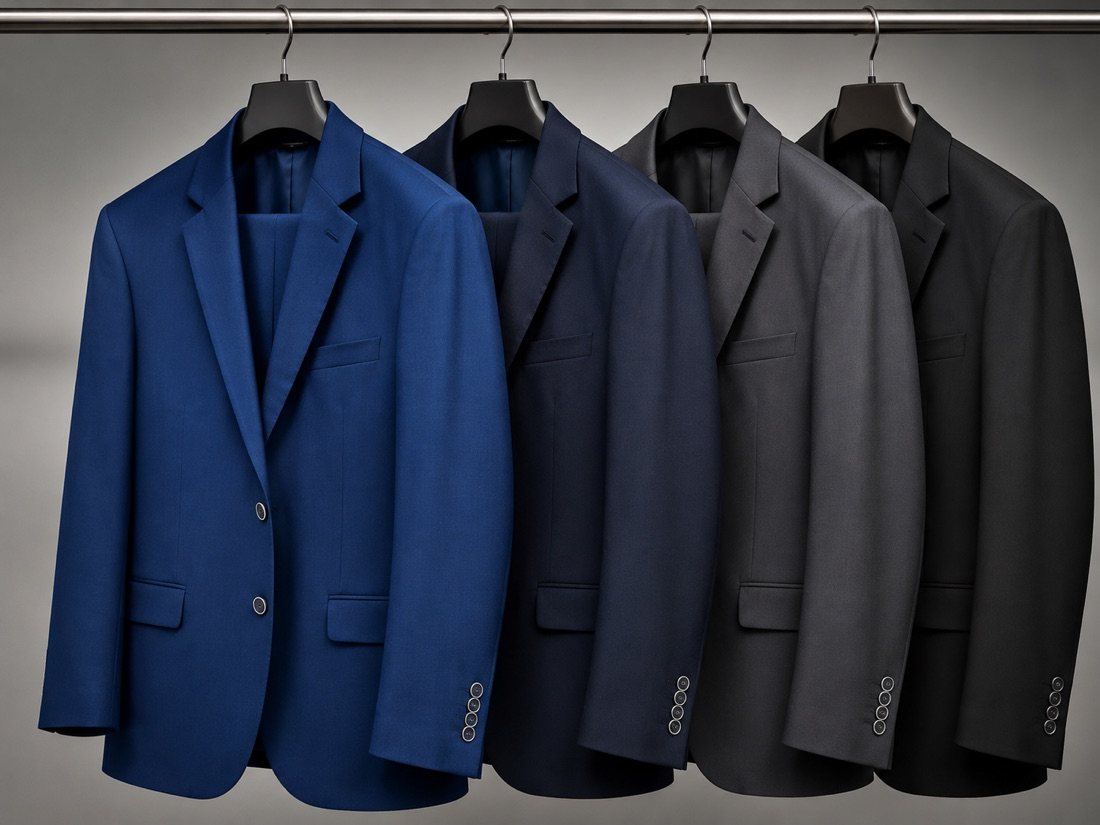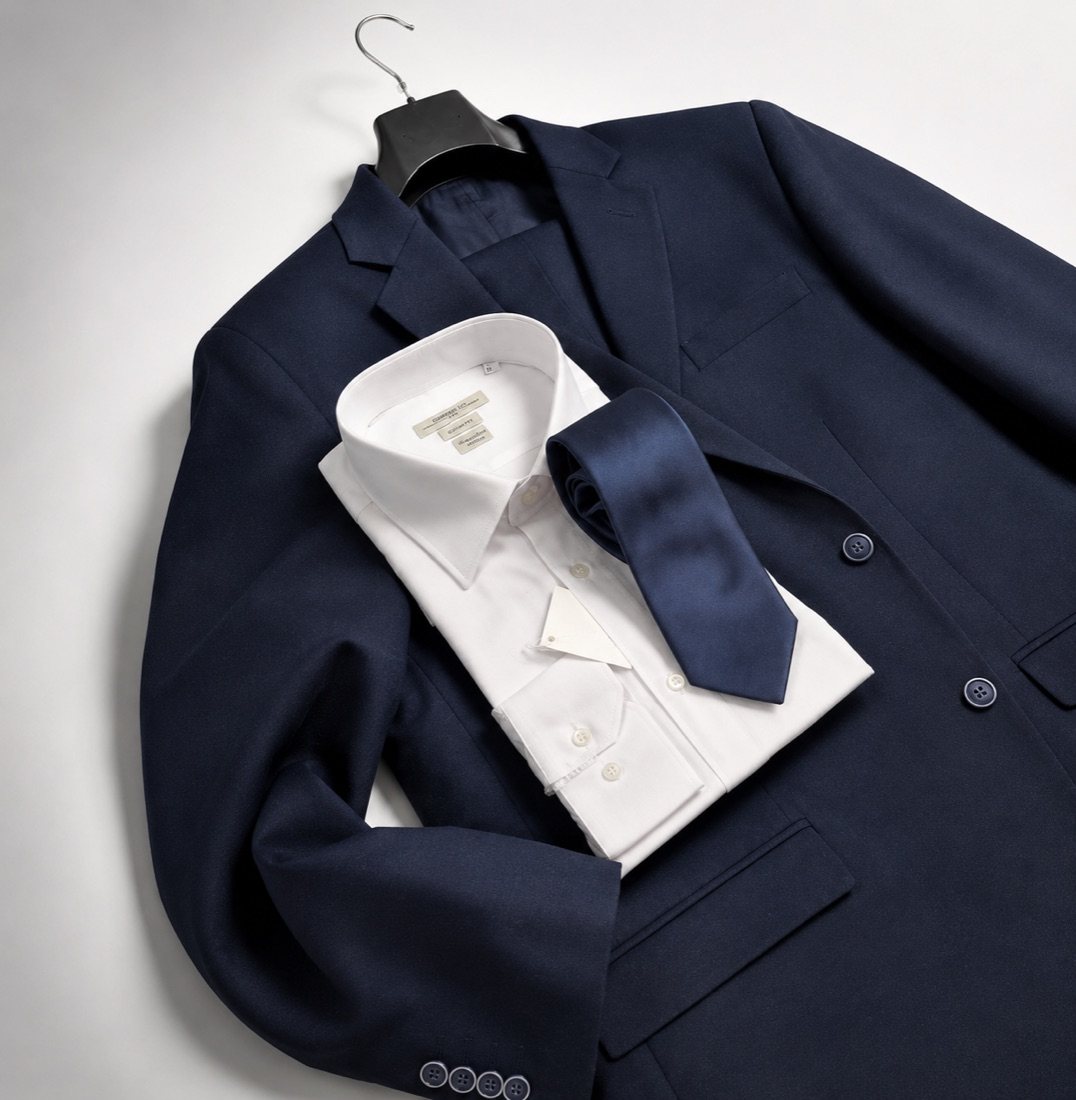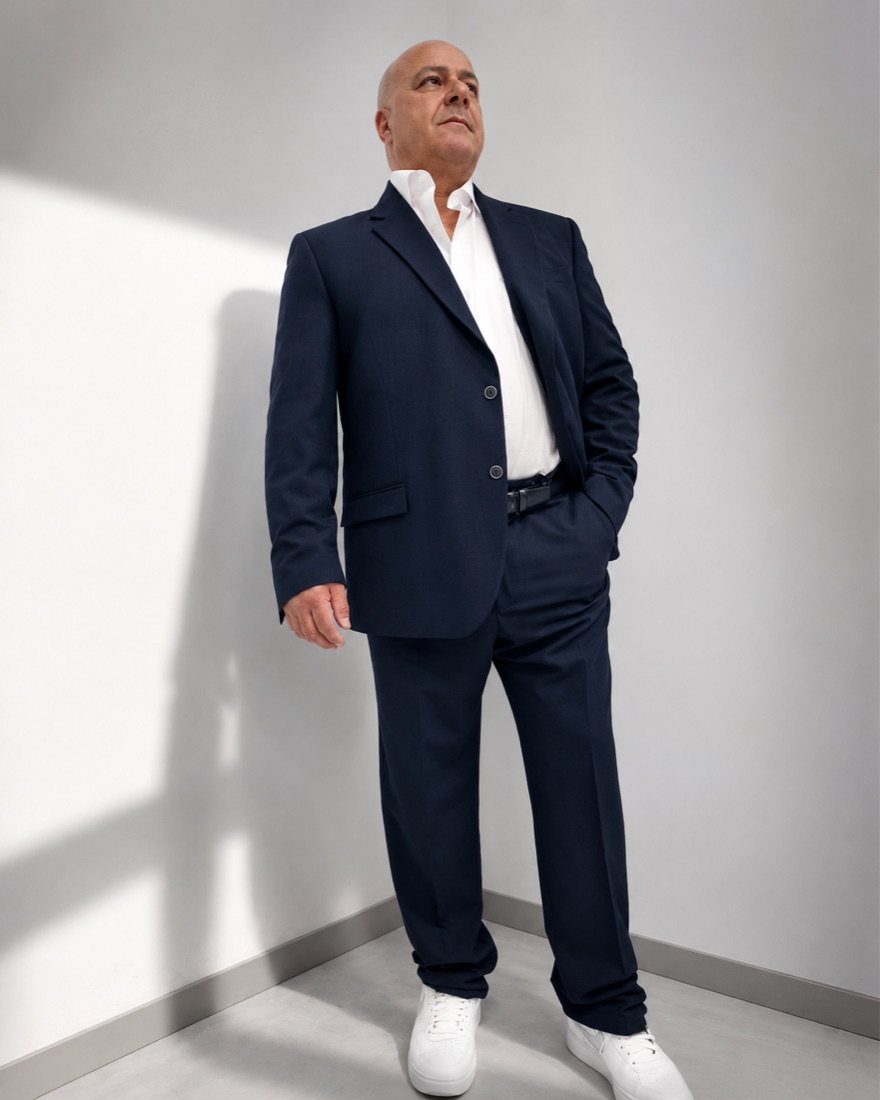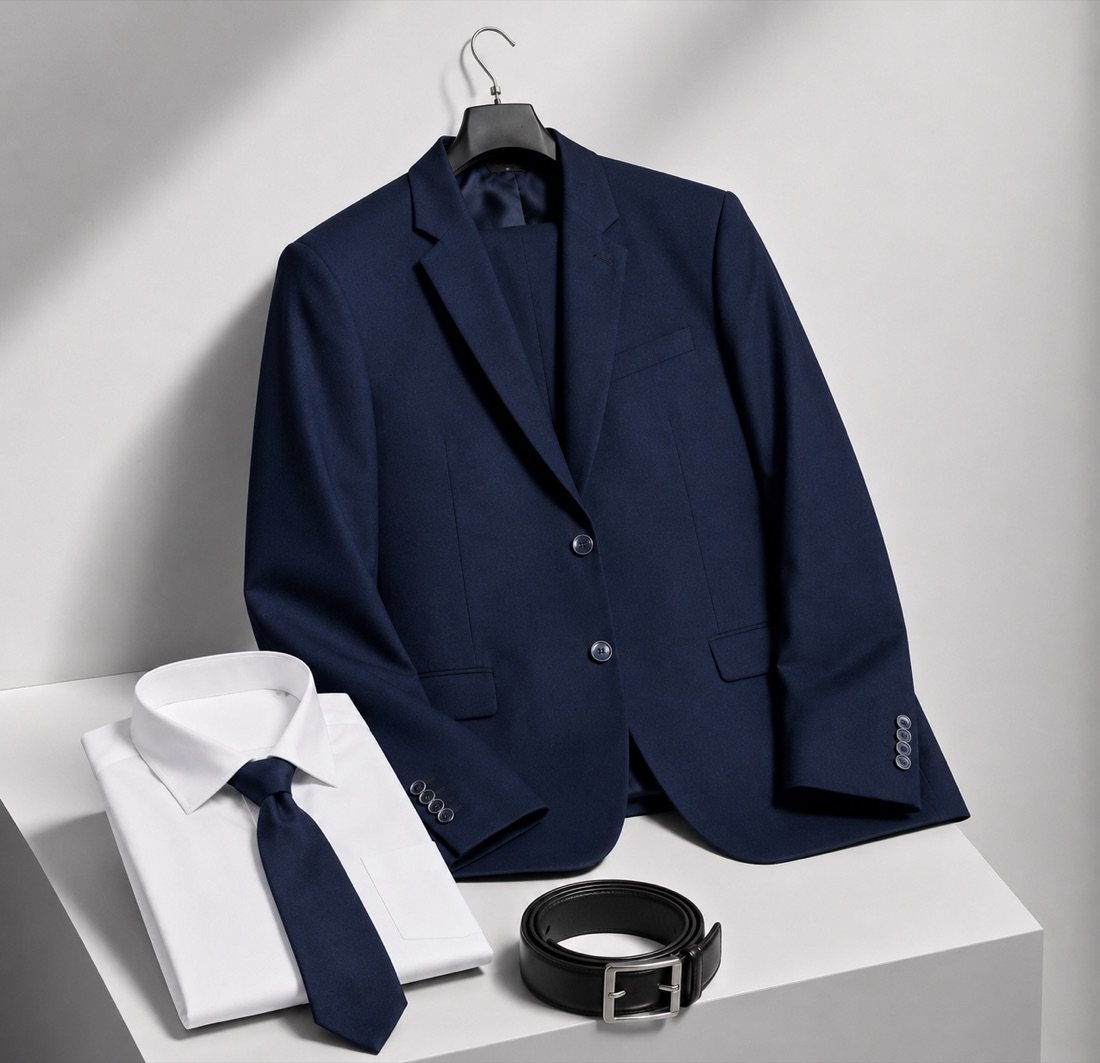
Just look at the big brands’ shop windows to understand it: plus size is almost always an afterthought. A standard garment, made bigger. Flawed reasoning — because a body is never a standard ‘multiplied’. It’s a body with its own proportions, which call for its own pattern.
The Problem: Arithmetic Scaling
In most industrial production, moving from size 52 to size 66 happens through simple arithmetic scaling. The base pattern is taken and ‘enlarged’ by X% in every direction.
The result? Shoulders too wide, a disproportionate sleeve, a misaligned waist, a crotch dropping past the knee. The jacket becomes a container, the trousers a tube. The man — who needed to feel flattered — feels covered.
"A well-made oversize garment doesn’t hide. It reveals what’s worth showing."
Our Method: Dedicated Patterns for Every Size
For fifty years we’ve done exactly the opposite. Every size range (46-54, 56-64, 66-72) has industrial patterns designed specifically for that range. Not enlargements: different architectures.
What Changes on Oversize Patterns
- Shoulder: slightly softer, never squared. Follows the natural collarbone line even with greater volumes.
- Sleeve: balanced to the arm's width, with the armhole calibrated so it never pulls at the armpit.
- Jacket waist: never too low. A higher waist has a real slimming effect on the figure.
- Jacket hem: a slight forward curve for a smoother profile.
- Trouser rise: never excessive. A rise that's too low drags the whole figure down.
- Leg: a slight taper toward the bottom — even in very large sizes — to keep proportion.
Fabrics That Know How to Drape
A smart pattern isn’t enough. You need fabrics with the right hand and the right drape. On larger sizes, fabrics that are too stiff weigh the look down; ones that are too soft lose their shape.
Our selection favours super 100-130 wools with an invisible touch of stretch, medium-to-heavy weight cotton gabardines, and Italian denim (Candiani, Berto) that holds its crease and ages well.
Style Tips for the Oversize Man
Colours
Navy, charcoal, forest green, dark brown. Deep, dark tones lengthen the silhouette. Light tones (cream, camel) work if well-calibrated and never glossy.
Verticality
A slightly longer lapel, a barchetta breast pocket, trousers breaking cleanly at the shoe with no cuff (or a very measured one): all details that draw the eye upward.
Shirts
A structured, semi-stiff collar that holds its height; a double cuff or cufflinks to add formality. Avoid fabrics that are too thin and crease with every movement.
Golden Rules
- The garment should touch the body, neither squeezing it nor floating on it.
- The jacket's shoulder ends where your own shoulder ends — never a centimetre beyond.
- Trousers should rest on the shoe with no excess break: the famous Italian "single break".
- Better a few right garments than many wrong ones.
"Oversize isn’t a sentence. It’s a style opportunity no one has ever explained properly."
— Mariné Philosophy
A Service, Not Just a Garment
The real difference, though, is made by service. Our made-to-measure department welcomes, by appointment, anyone looking for a garment truly designed for them. Measurements are taken at three different points of the same area (to account for volume variation), the fabric is chosen together, and there are three fittings — not one.
Because — and this is fifty years of work in a nutshell — a good oversize suit isn’t achieved through calculation, but through attention. Attention to the person who will wear it.