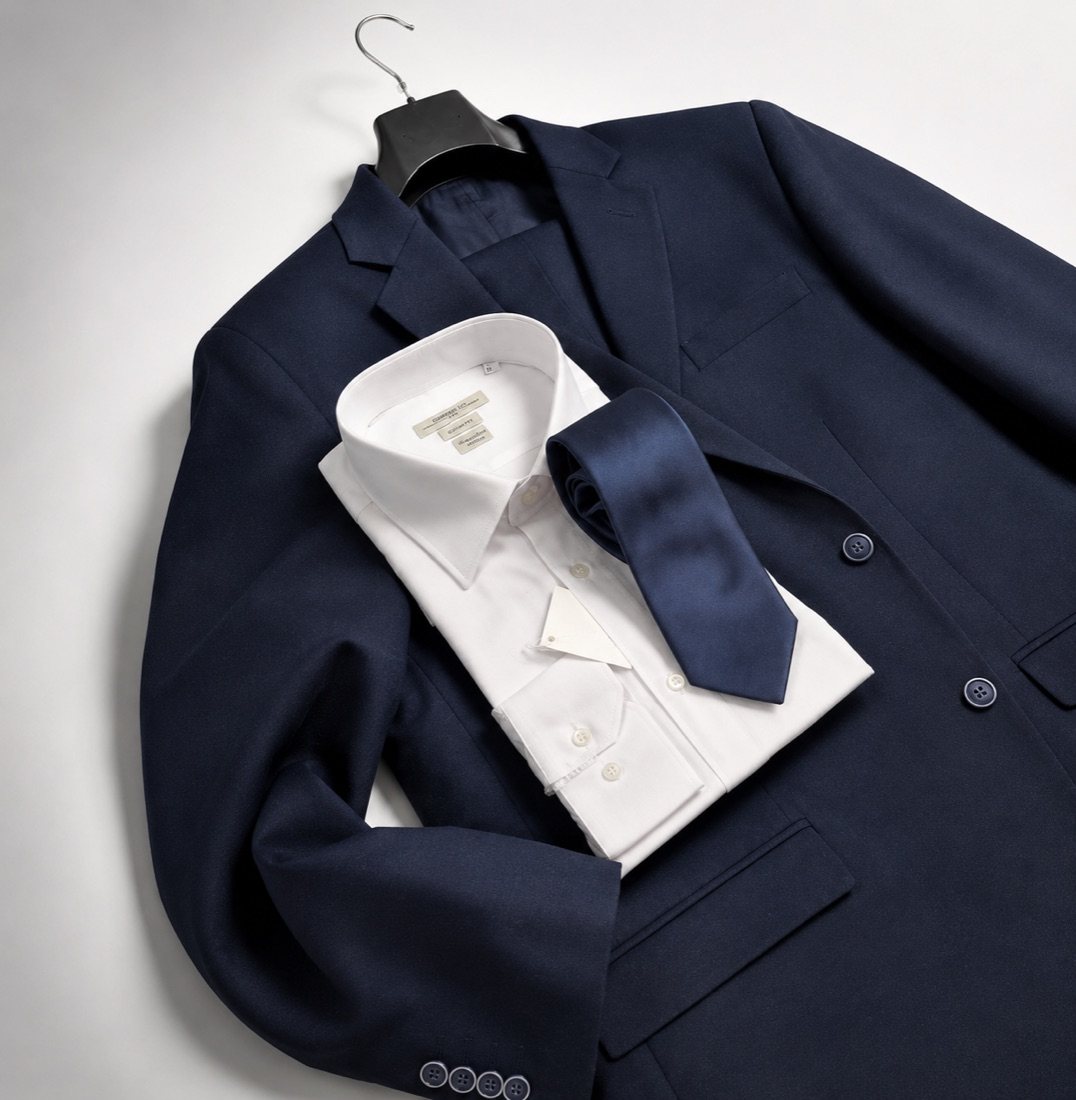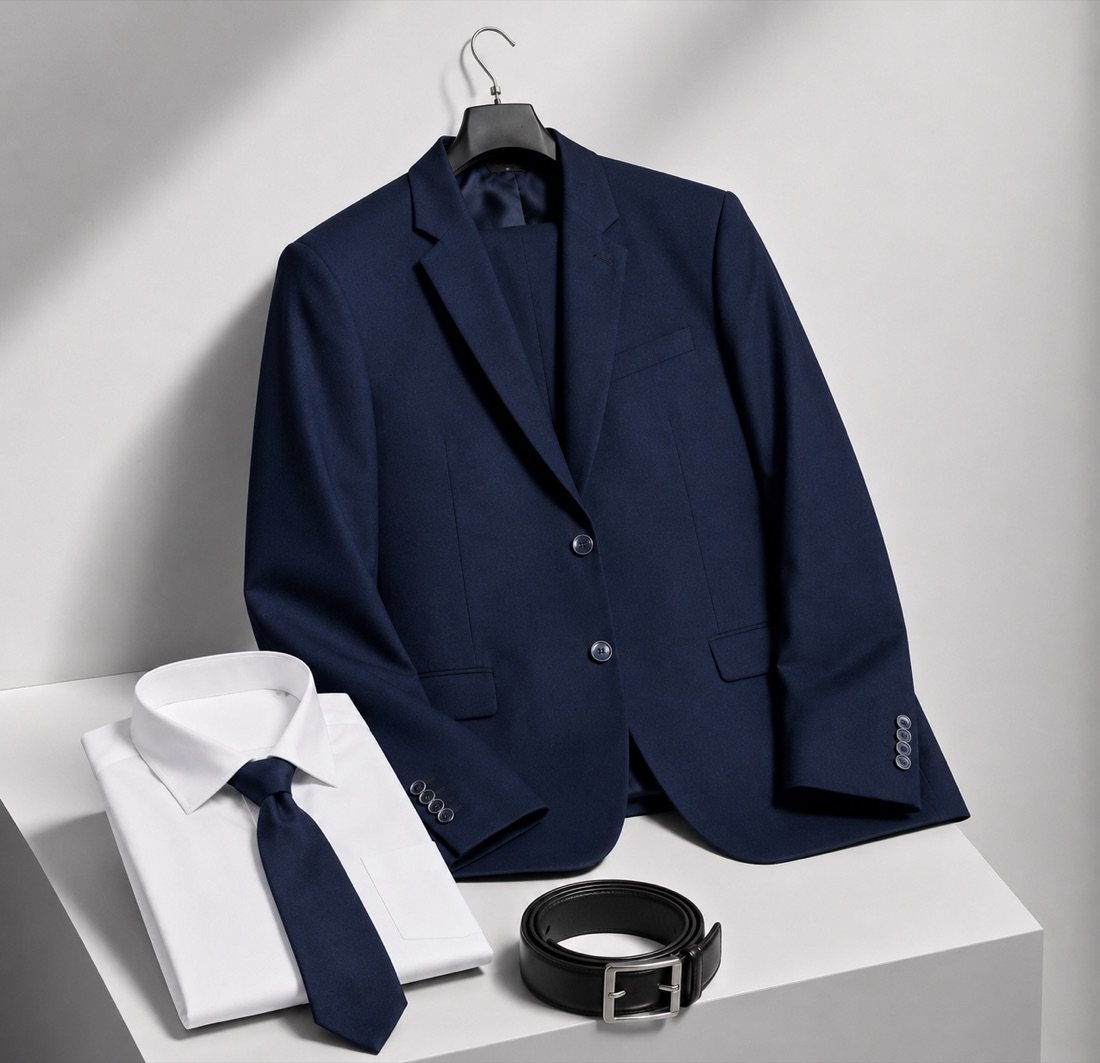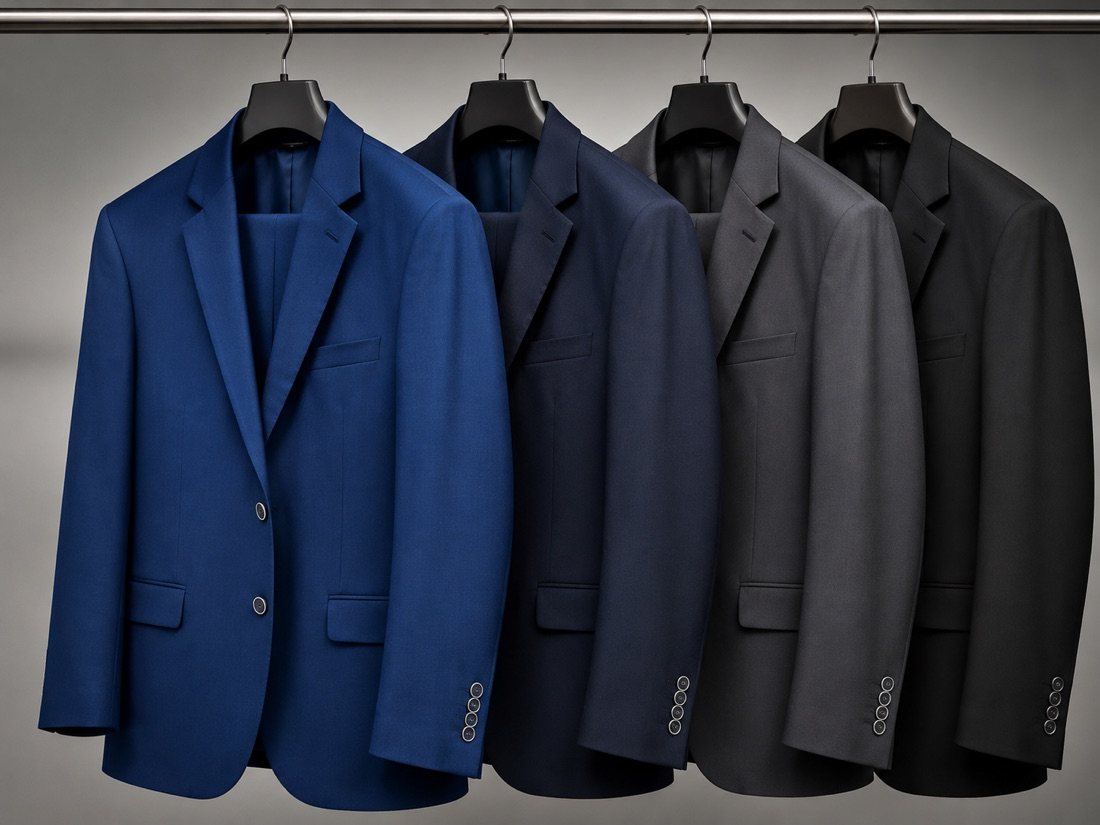
The word "tailored" is everywhere. On fast fashion tags, on the e-commerce pages of brands charging hundreds of euros, in outlet windows. But what really sets apart a garment sewn with mastery from one merely advertised as such? Seven signs. Always check them — before you open your wallet.
1. The Buttonhole
The lapel buttonhole (the one on the jacket's collar) is the tailor's most immediate signature. On an industrial garment it's cut by machine, rigid, with a uniform, flat texture. On a tailored garment it's worked by hand: small visible imperfections, a slightly irregular teardrop head, glossy waxed silk thread.
Hold it up to the light: if you see the thread's weave come alive along the edge, it's a genuine hand-sewn buttonhole. If it looks like a flat, uniform line, it's machine-made.
2. The Shoulder
Touch it. An industrial shoulder has rigid padding (often synthetic); a tailored shoulder — especially Neapolitan — is soft, barely defined, with the sleeve slightly gathered at the top ("shirt shoulder" or mappina).
Opening a tailored jacket is like looking at a small feat of engineering: you can see the canvas (natural horsehair canvas), the waist tape, the basting stitches. No glued synthetic film.
3. The Lining
A cheap lining is shiny polyester, stiff to the touch. A quality lining is bemberg (cupro) or silk: soft, matte, cool to the touch in summer, warm in winter. It breathes. It doesn't make you sweat.
Check how it's sewn too: in a tailored garment the lining is detached at certain points (under the arms, at the sleeve hem) to allow the main fabric to move. In an industrial garment it's glued or thread-sewn throughout.
"The lining is the jacket's lung. If it's poorly made, the jacket suffocates — and so does whoever wears it."
4. The Buttons
Synthetic buttons are glossy, uniform, all identical. Tailored buttons are made of buffalo horn, mother-of-pearl or wood: each piece unique, with slight variations in grain and colour. They feel warm to the touch, not cold like plastic.
One more detail: look at how they're sewn. On a tailored garment the button is attached with a small thread shank (2-3 mm), not sitting flat against the fabric. This lets the button move in the buttonhole without deforming it.
5. The Seams
Inspect an internal seam. An industrial seam is perfectly regular, with very small, identical stitches throughout. A tailored seam shows micro-irregularities: the stitches vary slightly from one another, the thread has small tension variations. It's a sign of handwork.
Also look for pick stitching (or hand stitching) along the lapel, collar and jetted pockets: small, visible, decorative stitches that speak of a hand-sewn garment.
6. The Sleeve Head
Look at how the sleeve attaches to the shoulder. On an industrial garment there's a perfect roundness. On a Neapolitan tailored one there's a small gather at the top ("mappina shoulder"): the fabric ripples slightly, giving movement and life.
It's not a flaw: it's the signature. Many houses try to machine-imitate it, but the result is always more artificial, less soft, more "constructed".
7. The Fit on the Body
None of the previous 6 points matter if the garment, worn, doesn't "sit" right. A tailored garment — even off-the-rack — should follow a few rules:
- The shoulder ends where your own shoulder ends, never a centimetre beyond.
- The collar hugs the neck without gaping or "sinking".
- The sleeve reveals 1 cm of shirt cuff.
- The lapel lies flat on the chest, without pulling away or curling.
- The back is smooth, with no horizontal creases (too tight) or vertical ones (too loose).
If even one of these points is off, the garment needs altering. A real tailor never hands over a suit that doesn't fit.
"A tailored garment isn't sold: it's delivered."
— Neapolitan saying
Bonus: The Labels That Matter
Beware of generic Euro-English ("Made in Europe", "Italian design"). Look for:
- Made in Italy (with no qualifiers) — indicates fully Italian production.
- The name of the fabric's mill (Vitale Barberis, Loro Piana, Zegna Baruffa, Cerruti).
- The tailor's or house's signature (hand-sewn inner label).
- A production date or serial number.
The Tailored Garment as an Investment
A good tailored garment costs. But it lasts twenty years, can be repaired, transforms with you. The "tailored" item sold for €200 in fast fashion — at best — lasts one season.
The maths, as always, is simple: cost per year of use. With that, the numbers speak for themselves.