Jeans were born in Genoa — the English word 'jeans' comes from 'Genes', the French name for the city. They then migrated to America, became the uniform of Californian miners, returned to Europe in the mid-20th century and, ironically, it was Italy again that took them into a dimension of luxury and research, with names that today supply the world's most prestigious fashion houses.
The Mills That Matter
Candiani (Milan)
Founded in 1938 in the Ticino Park, it's considered the most sustainable denim mill in the world. It produces for Levi's, Prada, Dolce & Gabbana, Balmain. It invented low-water-consumption dyeing technologies (the Kitotex project cut water use by 90%).
Berto (Bovolenta, Padua)
Since 1887. Specialised in traditional selvedge woven on vintage Japanese looms. Their denim is the one you see on jackets from brands like Aspesi, Herno, Rubinacci.
Isko (headquartered in Turkey, with R&D headquarters in Italy)
Revolutionised premium stretch denim with its R-Two technology (denim made of 50% recycled fibres). Industrial sustainability that seemed impossible ten years ago.
Italian denim is not marketing. It is chemistry applied to beauty.
What Selvedge Is (and Why We Seek It Out)
Selvedge (or self-edge) is a type of denim woven on old-school looms, called shuttle looms, which produce a fabric with a self-finished edge, with no overlock seam.
Modern high-speed looms (projectile, rapier) cut the denim at the sides and sew it. Selvedge looms, much slower (100 times slower), leave a compact, clean edge, recognisable by the small white (and often red) line seen when the trousers are turned inside out.
A selvedge jean ages better: it develops a patina, wears in the right places, keeps its shape. An industrial jean frays, stretches out, fades evenly.
Weights
Denim is measured in oz per square yard:
- 9-11 oz: lightweight. For summer, denim shirts, skirts.
- 12-14 oz: standard. The weight of most everyday jeans.
- 14-16 oz: heavy. Sturdy, lasts decades, builds itself on the body.
- 17+ oz: heavyweight. For true enthusiasts. Stiff at first, sublime after a year of wear.
Prized Treatments
Raw / One Wash
Raw denim has never been washed. It's stiff, dark, almost woody. It moulds onto the body of whoever wears it: after 6 months it carries your creases, your whiskers (the horizontal folds at the groin), your fade marks.
Rinse Wash
A single wash after production, to remove initial stiffness. Keeps the intense colour but becomes wearable straight away.
Stone Wash
Washed with pumice stones. Removes colour in a controlled way. A classic.
Acid Wash
Chlorine treatment. Marbled effect. Very 1980s, and it's making a comeback.
A good raw denim, worn for a full year without washing, tells the story of that year better than a diary.
Raw denim philosophy
How to Care for Quality Jeans
- Wash as little as possible. Denim isn't like a t-shirt. One wash every 15-20 wears is perfectly fine.
- Cold water, inside out. Always. Gentle detergent, no fabric softener.
- Never in the dryer. Heat ruins the weave and shrinks it. Always air-dry, never in direct sunlight.
- The freezer. If it smells but isn't dirty, put it in the freezer overnight: it kills bacteria without damaging the fibres.
Our Denim: the Comandante Line
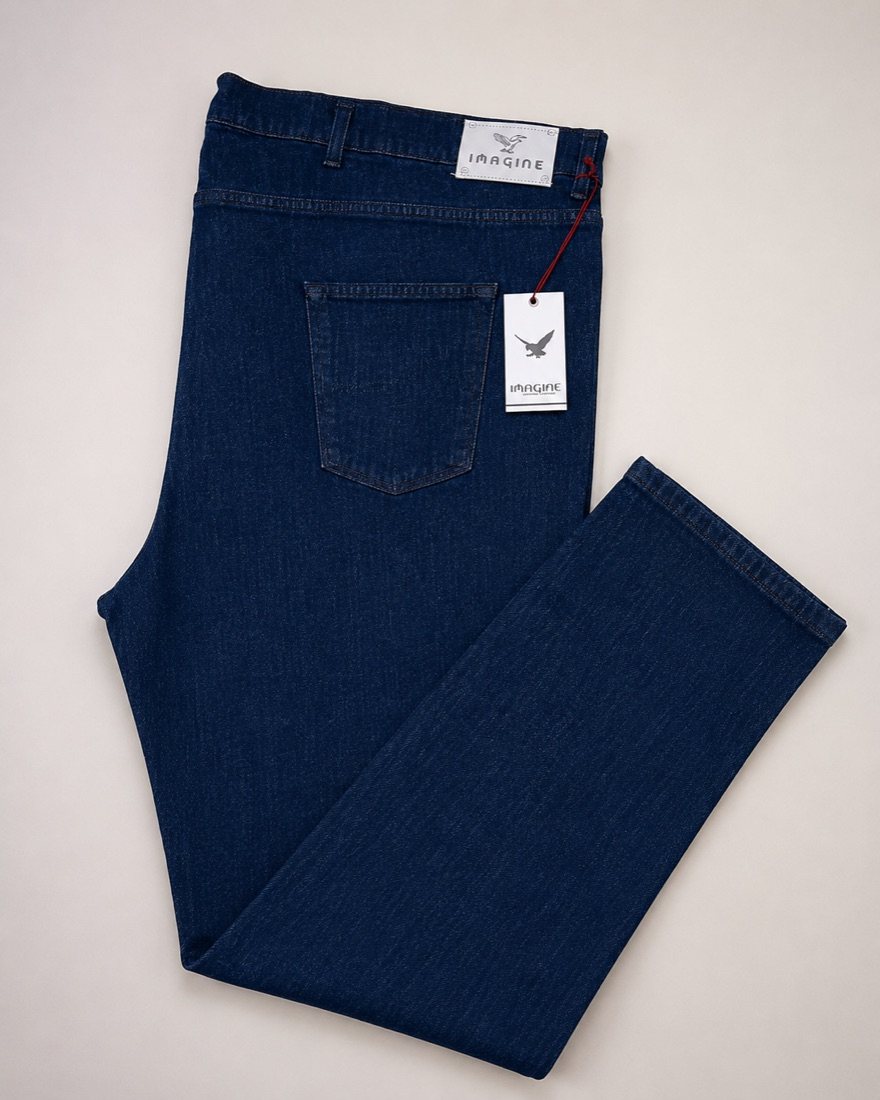
In our collection, the Comandante Jeans is made from 13.5 oz Italian Candiani denim, vat-dyed (not sprayed) to guarantee colour uniformity. Straight comfort fit, never too tight, never too loose, up to size 87. Genuine leather label, hand-sewn.
Because jeans, ultimately, are like a good wine: they should age well, tell their story, improve with time. Not just survive.